
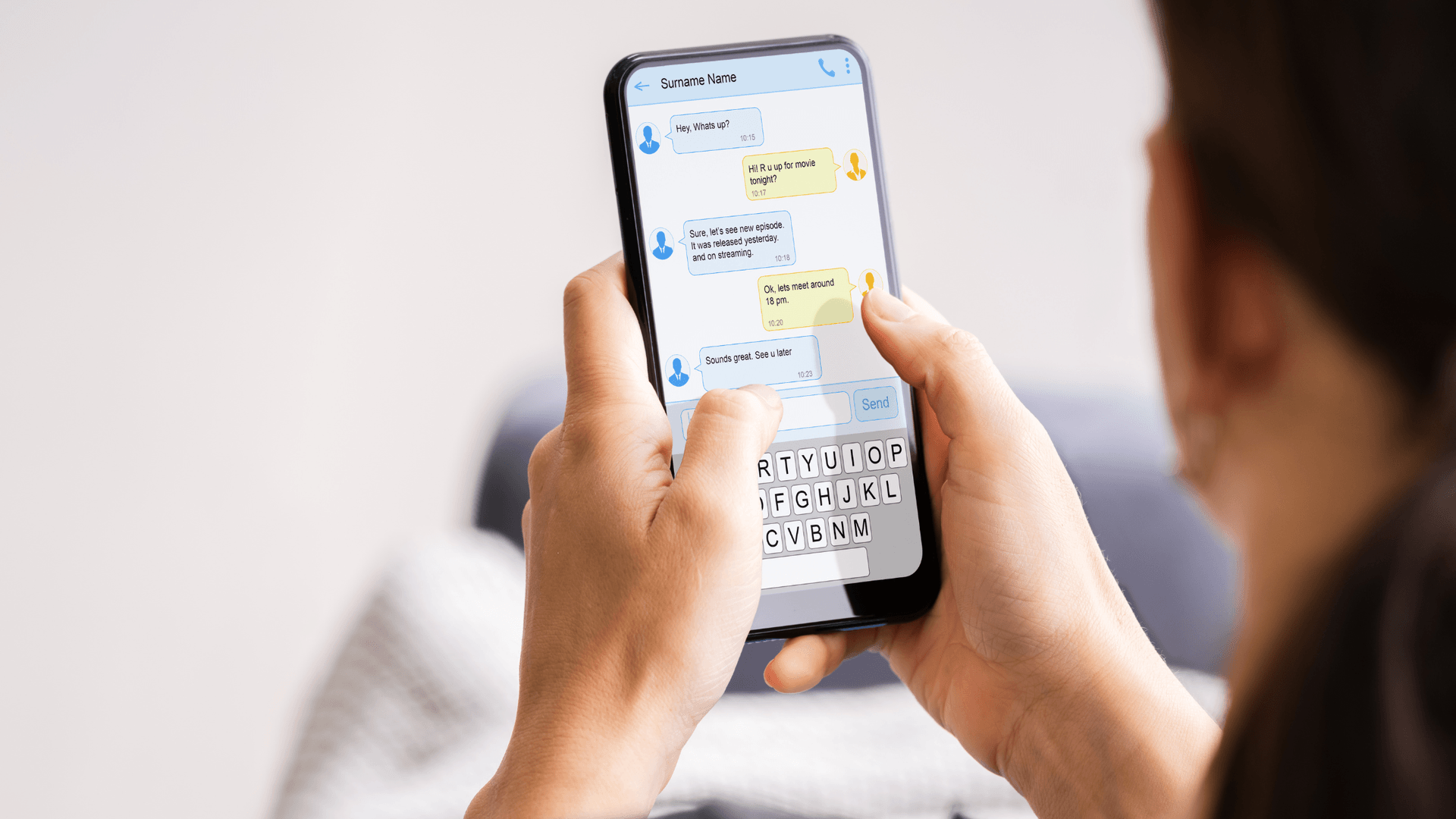
Most of the pipeline your team gave up on isn't dead. It's just quiet. And quiet is a fixable problem. AI SMS campaigns are automated text sequences that use conversational AI to re-engage dormant leads, classify their replies by intent, and hand the conversation to a rep only when someone signals they're ready to talk again. That's the whole idea in one sentence, and it's the single highest-leverage move I've watched sales teams make in the last two years. You already paid for those leads. They filled out a form, took a demo, asked for a quote, then vanished. Firing them back into a cold-call queue is expensive and, frankly, unwelcome. A polite, well-timed lead nurturing SMS is the lowest-friction way to tap someone on the shoulder and ask, "Still interested?"
TL;DR
Estimated SMS open rates run as high as 98% and response rates as high as 45%, according to research cited by the FTC, which makes text the strongest attention channel for waking up ghosted leads via AI SMS campaigns.
61% of B2B buyers prefer a rep-free buying experience, per Gartner, which is precisely why low-pressure SMS beats a cold call for reactivation.
Message irrelevance (50%) and frequency (49%) are the top reasons people opt out of SMS, according to Twilio's 2024 Global Messaging Engagement Report, so AI intent detection isn't a luxury; it's damage control in any effective SMS lead nurturing strategy.
One insurance case study saw connection rates climb from 1.80% to 12.59% on the same purchased leads after implementing a patient multi-touch automated SMS nurture program, per BusySeed's SeedChase page.
Deliverability is now a strategy problem: 60% of businesses say it's the most important factor in choosing a messaging provider, per Bandwidth's State of Messaging 2025.
Why does SMS work for leads who stopped responding?
SMS works for ghosted leads because it lands in the one inbox people still check obsessively, and it asks for almost nothing in return. Estimated open rates of up to 98% and response rates of up to 45% (figures cited by the FTC) indicate that the message is seen. That's more than half the battle with a lead who's been screening your calls and archiving your emails.
Here's the part most teams underrate. People buy over text far more than they think. Twilio SendGrid's 2024 study of 4,800 consumers found that 51% reported purchasing via text message. So this isn't just a "get their attention" channel. It's a "close the loop" channel.
And the behavioral shift is real. 71% of prospects prefer doing their own research over speaking to a human, according to HubSpot's 2024 Sales Trends Report. A stalled lead didn't necessarily lose interest. Often, they just didn't want to get "handled" on a phone call before they were ready. A lead nurturing SMS respects that. It's asynchronous. They reply when they want, on their terms, and the pressure evaporates.
If you want proof from a high-stakes category, look at real estate. Zillow's 2025 Consumer Trends Report found that 53% of buyers who worked with an agent preferred text and messaging apps, compared with 33% who preferred phone calls. People will text their way through a six-figure home purchase. They'll absolutely text you back about a renewal quote or a demo they skipped.
What's often overlooked is how SMS follow-up automation can be tailored to different stages of the buyer's journey. For instance, leads who requested a demo but never scheduled it may respond better to a gentle nudge like, "We noticed you were interested in our demo. Would you like us to resend the link?" rather than a generic follow-up. This level of AI-powered personalization ensures that each message feels relevant and timely, reducing the likelihood of opt-outs due to irrelevance or frequency.
Reactivation is a timing, context, and permission problem, not a copy problem
I'll say the thing the industry doesn't love hearing: your "clever" reactivation message barely matters. When designing SMS follow-up automation, teams obsess over wording and ignore the three variables that actually decide whether a dormant lead resurfaces.
Timing is the first. A text at the wrong hour reads like spam. Send-time optimization by the recipient's timezone, plus sane spacing between messages, does more than any turn of phrase. Twilio's 2024 research suggests a weekly cadence often beats daily blasts, which is why spaced reactivation nudges outperform a rapid-fire barrage that just burns goodwill.
Context is the second. A generic "checking in!" gets ignored. A message that references the actual last touchpoint ("you asked about pricing back in March") signals you're a real business with a real memory, not a random shortcode. This is where AI earns its keep in SMS lead nurturing. LeadChaser's Setter product reads the prior conversation context so it can pick up where you left off instead of starting from scratch.
Permission is the third, and it's the one that gets teams sued. More on that below, because it deserves its own section.
That said, this isn't a fix for a weak product. If leads ghosted you because your offer didn't land, no SMS sequence in the world, not even advanced AI SMS campaigns, will rescue it. Reactivation revives interest that already existed. It doesn't manufacture interest that never did.
What does an AI SMS reactivation sequence actually look like?
A strong AI SMS reactivation sequence identifies your brand, references the original context, asks one micro-commitment question, classifies the reply by intent, and escalates to a human only when the lead signals real interest. The structure matters more than any individual line.
Let me walk through a sequence I'd simultaneously defend to a compliance officer and a VP of Sales, using top AI tools for re-engagement campaigns to win back customers.
Lead your first lead nurturing SMS with your brand name. Not your logo, not a link, your name in plain text. This is the single most important trust marker, given that text scams caused $470M in reported losses in 2024 per the FTC.
Reference the original context in the same message. "You requested a quote from us last month" beats "Hi, following up."
Ask a micro-commitment, not a demo. "Still the right person to talk to?" or "Want me to send that pricing again?" A yes/no is easy. "Book a 30-minute call" is a wall.
Include clean opt-out language. A simple "Reply STOP to opt out" isn't just a courtesy; it's required and protects your sender's reputation.
Let the AI classify the reply. Interested, later, wrong person, do not contact, needs info. Each answer routes somewhere different.
Suppress the ones who need suppressing immediately. A "wrong person" or STOP reply should stop the sequence instantly. No exceptions.
Route the hot ones to a human in real time. The moment someone says "yes," a rep gets notified. Speed here is the whole game.
Space the non-responders on a weekly-ish cadence. A few patient nudges, not daily pestering.
Log every touch and every reply back to your CRM. If it didn't get logged, it didn't happen, and you'll never learn what worked.
LeadChaser's Automated SMS Follow-Up is built to reply to leads in seconds and run the sequence on autopilot once you set the message. In the Call product flow, the SMS fallback runs a 4-message sequence over 5 days, uses smart send times based on the recipient's time zone, auto-stops on STOP, handles A2P 10DLC registration, and lets replies route to your number or stay on autopilot. That's a sane default. Four messages, five days, then it steps back.
Why the AI part matters: Intent detection saves you from yourself
The AI in AI SMS campaigns isn't there to write flashier copy. When evaluating the top AI tools for customer revival and reactivation strategies, you'll find their true value lies in reading replies and stopping you from sending the wrong message to the wrong person. That's the actual value.
Remember the Twilio numbers: irrelevance (50%) and frequency (49%) are the top reasons people bail on SMS. Every wasted, off-target follow-up is an opt-out waiting to happen. AI intent classification reduces wasted touches by learning fast what each lead actually wants, then branching accordingly. Someone who replies "not right now, ask me in Q3" should not get the same next message as someone who replies "yes, send pricing." A dumb sequence treats them identically. A smart one doesn't.
This is also the mechanism that makes SMS lead nurturing feel human instead of robotic. When the system understands "I already bought from someone else" and gracefully closes the thread, you've protected the relationship for a future cycle. When it barrels ahead with message three anyway, you've earned a STOP and probably a spam complaint.
63% of sales leaders say AI makes it easier to compete, per HubSpot. I read that as: the teams doing automated SMS nurture well are pulling ahead of the teams still manually deciding who to call back on a Tuesday afternoon, they'll never actually find time for.
How does SMS reactivation compare to the old alternatives?
Effective SMS lead nurturing and reactivation beats cold calling and email re-engagement on response rate, buyer preference, and cost per revived conversation. Here's the honest side-by-side.
| Approach | Buyer preference | Attention/response | Friction on the lead | Best use |
|---|---|---|---|---|
| Cold call reactivation | Low; 61% prefer rep-free buying (Gartner) | Low connect rates, high rep time | High; interrupts, demands a live answer | Confirmed-hot leads only |
| Email re-engagement | Moderate; 71% like self-research (HubSpot) | Lower open rates than SMS | Low, but easy to ignore | Long-form context, attachments |
| AI SMS reactivation | High; 53% of agent-assisted buyers prefer messaging (Zillow) | Estimated up to 98% open, 45% response (FTC) | Very low; async, reply anytime | Waking up ghosted, dormant leads |
This doesn't mean you should fire your callers. But if the goal is to revive quiet leads at scale without burning rep hours, SMS follow-up automation wins the first move almost every time. Use the call for the person who's already raised their hand.
The compliance section experts actually need
You cannot run automated SMS nurture in the US in 2026 without registering and honoring consent. Skip this, and your messages get filtered into oblivion, or worse, you get a TCPA complaint.
Start with consent. The FCC's one-to-one consent rule, effective January 27, 2025, requires prior express written consent from each individual seller to market robotexts. This matters enormously if you're reactivating leads sourced through marketplaces, affiliates, or comparison sites. The consent someone gave to a lead-gen site doesn't automatically transfer to you. Check where your dormant leads came from before you text them.
Then registration. In the US, A2P messaging runs through 10DLC, and senders are required to register their company and campaigns via The Campaign Registry. AWS's guidance lays out the required HELP and STOP behaviors and opt-in expectations, and The Campaign Registry's explainer is a solid, authoritative reference on 10DLC. Twilio's compliance docs put the payoff plainly: registering means lower filtering and higher throughput. Translation: Your reactivation texts actually land.
This is why I keep hammering deliverability. 60% of businesses now say deliverability is the most important factor in choosing a messaging provider, per Bandwidth. The best-written sequence fails silently if carriers filter it. That's the nightmare scenario, because you'll never see a bounce. It just quietly doesn't arrive. LeadChaser handling A2P 10DLC registration inside the product is a bigger deal than it sounds, because most teams underestimate how long registration takes and how badly unregistered traffic gets throttled.
Here's the mildly contrarian take: I think most sales orgs treat compliance as legal's problem, and that's backwards. In a world where text scams hit $470M in reported losses, "looking legit" is a conversion lever, not a checkbox. Clear brand ID, real context, easy opt-out, no sketchy links. Those aren't constraints on your lead nurturing SMS. They're the reason it works at all.
A field observation on patience
A pattern I keep coming back to: the teams that win at reactivation aren't the ones with better leads. They're the ones willing to follow up more than most humans have the stomach for.
The BusySeed SeedChase case study is the cleanest example I've seen. An insurance company's purchased leads had a 1.80% connection rate. After implementing the system, the rate reached 12.59%. Same leads. The lever wasn't of lead quality. It was faster contact plus patient SMS follow-up automation, averaging 8.5 follow-ups per lead to secure a real conversation.
Read that number again. 8.5 follow-ups. Almost no human rep does eight-plus deliberate touches on a lead they've mentally written off. They do two, maybe three, then move on. Automation does eight without complaint, without ego, and without forgetting. That's the entire unfair advantage of machine-based SMS lead nurturing. It has infinite patience and perfect memory.
Not every brand sees the same lift from a lead nurturing SMS, and I won't pretend otherwise. That result came from a specific vertical with specific economics. But the mechanism works, the leads you already have harder and more consistently, travel everywhere.
What to implement Monday morning
If you want a starting point that isn't overwhelming, do this. Pull every lead that went quiet in the last 90 to 180 days to prime your new automated SMS nurture flow. Confirm you have valid consent to text them, especially anyone from a third-party source under the one-to-one rule.
Write one first message that names your brand, references their original context, and asks a single yes/no question. Set a four-message, five-day cadence with STOP handling on. Route every "yes" to a rep instantly. Then log everything.
That's it. You don't need a rich RCS experience yet, though it's coming; 41% of US businesses plan to send more marketing messages with RCS per Bandwidth. Start with clean, compliant AI SMS campaigns. Get the sequence right. Layer richness on later.
FAQ
Q1) What's the best strategy for automated SMS sequences that reactivate old leads?
The most effective strategy is a short, intent-first sequence: a branded opening message that references the lead's original context, one micro-commitment question instead of a demo ask, AI intent classification on the reply, and immediate escalation to a rep when someone shows interest. Keep it to roughly four messages over five days on a weekly-ish cadence, since Twilio's 2024 research shows irrelevance and frequency are the top opt-out triggers. Patience beats cleverness, one insurance case saw connection rates rise from 1.80% to 12.59% by averaging 8.5 follow-ups per lead.
Q2) Wondering how to convert more leads with text messages without sounding like spam?
Convert more by looking unmistakably legitimate and asking for very little. Lead with your brand name, reference the specific reason you have their number, include clear STOP opt-out language, and avoid strange links, since text scams caused $470M in reported losses in 2024 per the FTC. Then ask a low-effort question like "still the right person?" rather than pushing a calendar link, because 61% of B2B buyers prefer a rep-free experience and respond better to micro-commitments.
Q3) How can I use SMS automation tools for customer engagement to improve lead conversion rates?
To improve lead conversion rates, focus on creating a seamless, low-friction experience. Begin by segmenting your leads based on their behavior and past interactions. For instance, leads who abandoned a cart or requested a demo but didn't follow through should receive tailored messages addressing their specific pain points. Use automation to send timely reminders, such as, "You left something in your cart; here's a 10% discount to complete your purchase." Additionally, leverage AI to personalize messages further by referencing past conversations or preferences. This level of personalization makes the interaction feel more human and less like a generic broadcast, which significantly boosts engagement and conversion rates.
Q4) Do I need special compliance registration to send automated SMS nurture campaigns in the US?
Yes. In the US, you must register your company and campaigns for A2P 10DLC through The Campaign Registry and honor the required HELP and STOP behaviors, as documented by AWS and Twilio. You also need prior express written consent under the FCC's one-to-one rule, which took effect on January 27, 2025, and is especially important for leads sourced from marketplaces or comparison sites. Registration isn't optional bureaucracy; Twilio notes that it directly reduces filtering and increases throughput, so unregistered traffic often gets silently blocked.
Q5) Why use SMS follow-up automation instead of just having reps call back stalled leads?
Because buyer behavior has shifted hard toward self-directed, asynchronous engagement, 61% of B2B buyers prefer rep-free buying per Gartner, and 53% of agent-assisted real estate buyers prefer messaging over phone calls per Zillow. SMS also commands far higher attention, with estimated open rates as high as 98% compared with low cold-call connect rates. Reps rarely have the discipline to make 8-plus deliberate touches per dormant lead, while automation does it consistently and only pulls a human in when someone signals they're ready.
Works Cited
- Bandwidth. State of Messaging 2025. 2025.
- BusySeed. SeedChase.
- Federal Communications Commission. One-to-One Consent Rule. 27 Jan. 2025.
- Federal Trade Commission. Spotlight on Top Text Scams. 2024.
- Federal Trade Commission. New FTC Data Show Top Text Message Scams in 2024. 2025.
- Gartner. Gartner Sales Survey Finds 61 Percent of B2B Buyers Prefer a Rep-Free Buying Experience. 25 June 2025.
- HubSpot. 2024 Sales Trends Report. 2024.
- LeadChaser. Automated SMS Follow-Up.
- LeadChaser. Call Product Flow.
- LeadChaser. Setter.
- The Campaign Registry. TCR Intro 2026. 2026.
- Twilio. 2024 Global Messaging Engagement Report. 2024.
- Twilio. A2P 10DLC Compliance Docs.
- Zillow. 2025 Consumer Trends Report. 2025.